Following the Packet: My Journey Through the CCNA Learning Path
Three courses, one connected perspective: how Packt’s networking specialization brings access, routing, security, and automation into the same picture.

Rizwan Syed
3 min read
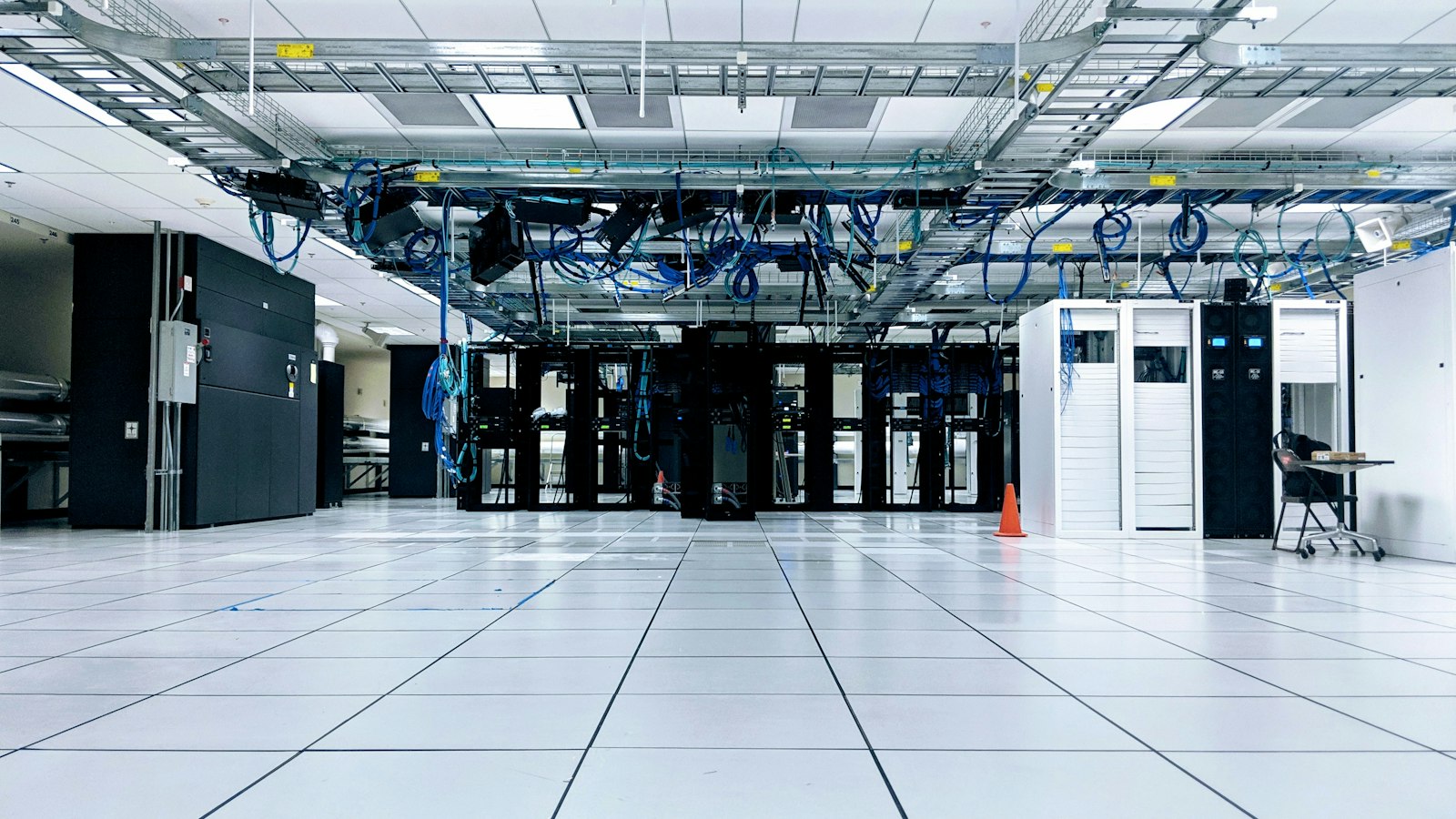
Every application depends on a path through the network. Understanding that path means seeing how addressing, switching, routing, services, and security work together. Completing Packt’s Cisco CCNA (200-301) specialization on Coursera on October 19, 2026, brought those connections into one structured learning journey, from the first access connection to the possibilities of network automation.
Building the path in three stages
The specialization consisted of three courses: Networking Fundamentals & Network Access, IP Connectivity & IP Services, and Security Fundamentals & Network Automation. Completing all three created a clear progression. First came the building blocks and local connectivity, then communication between networks, followed by the controls and tools used to manage them.
That progression fits naturally with my infrastructure background. A network is part of a larger service chain that includes identity, operating systems, applications, and monitoring. Studying its components together makes it easier to describe how an individual configuration choice can affect the wider environment and the people who depend on it.
Connecting configuration to behavior
The learning covered areas such as IPv4 and IPv6, VLANs, routing, and supporting services. I see the value of those topics in the relationships between them. An address belongs to a network; a device needs a suitable path; an application may depend on name resolution. Understanding each piece helps explain the overall behavior.
A useful way to frame a technical discussion is to follow a request from its source toward its destination. Where should it travel? Which boundary should it cross? What evidence would show that the expected path is working? This approach gives network knowledge a practical purpose: making complex systems easier to reason about.
Bringing security and automation together
The third course extended the journey into security and automation. For me, that is an especially useful connection because my work also includes building tools to support infrastructure operations. Before automating a network task, it helps to understand the behavior being changed, the permissions involved, and the evidence needed to verify the result.
Automation can make a well-defined process repeatable. It also makes clear requirements essential. A proposed change should have an intended state, a way to check the outcome, and a recovery approach if the result differs from expectations. Those considerations make the relationship between networking knowledge and software skills particularly valuable.
A more connected view of infrastructure
Earning Packt’s three-course specialization certificate through Coursera marked the completion of a CCNA-aligned learning program. The journey connected foundational networking with services, security, and automation. That breadth is useful to me because dependable infrastructure requires an understanding of how the parts behave together.
What I carry forward is the habit of connecting details to the whole system. A VLAN, a route, or a service configuration becomes easier to assess when its purpose is clear. I want that clarity to show in how I troubleshoot, explain a design, and approach automation: a thoughtful path from the technical detail to the operational need.
What I take forward
Understanding a network means being able to explain the path, the boundaries, and the services that make communication possible.
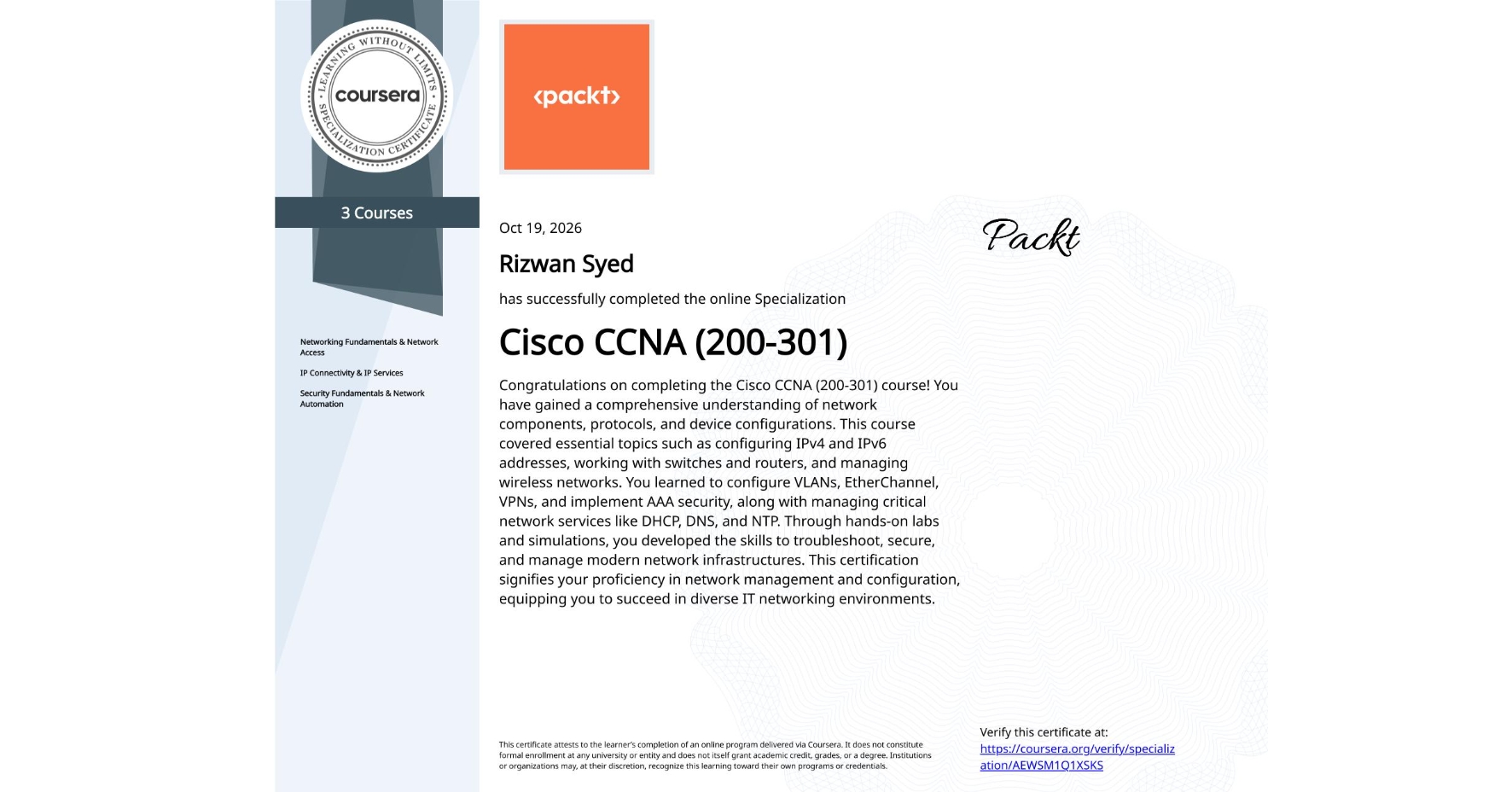
Specialization certificate
Cisco CCNA (200-301) — Coursera Specialization
- Issued by
- Packt · Coursera
- Completed
- Credential ID
- AEWSM1Q1XSKS
Packt specialization certificate for three completed courses spanning network fundamentals and access, IP connectivity and services, and security and automation. CCNA-aligned training delivered through Coursera.
Explore the learning behind this story
Continue the journey
View all stories
Learning journal · 3 min read
From Security Alerts to Clearer Decisions: My Generative AI Learning Journey
What completing IBM’s cybersecurity AI course taught me about useful automation, evidence, and keeping human judgment at the center of security work.
Learning journal · 3 min read
Beyond Knowing the Answer: Building Sharper Cybersecurity Judgment
My reflections on IBM’s Security+ and CySA+ assessment course, and the value of turning technical knowledge into clear, defensible decisions.