The First Useful Question: Why Networking Fundamentals Still Matter
A closer look at my Networking Fundamentals & Network Access milestone and the practical value of understanding how a connection begins.

Rizwan Syed
3 min read
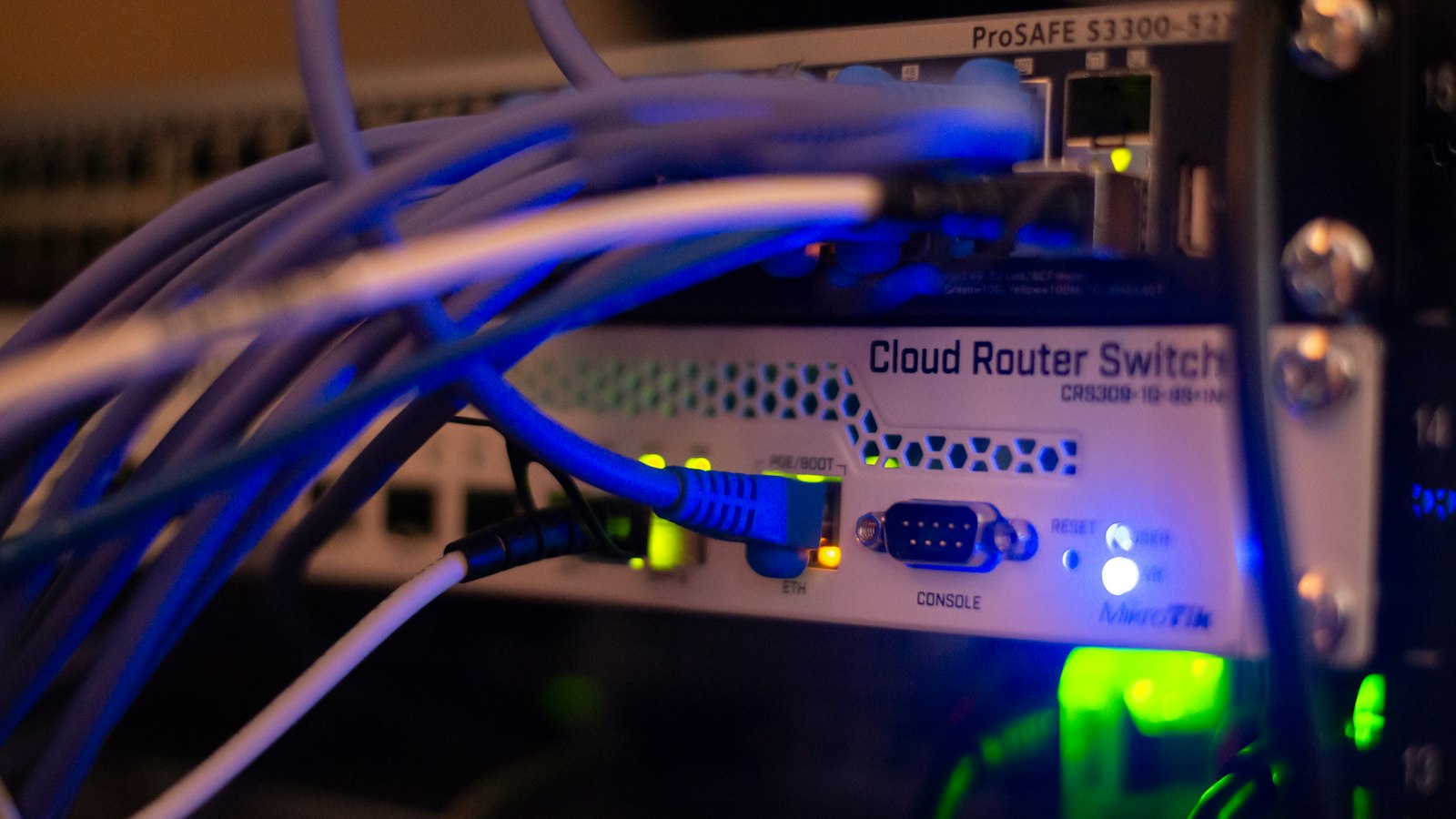
When a connection fails, the most useful first step is often a precise question. Is the device on the expected network? Does its addressing make sense? Is the access path behaving as intended? Packt’s Networking Fundamentals & Network Access helped bring those foundational questions into focus. I completed the course on October 19, 2026, as part of my broader networking learning.
Returning to the building blocks
Infrastructure work brings together many systems, each with its own interface and terminology. Beneath them are basic relationships that need to hold: a device connects through a medium, joins a network, and communicates using an agreed set of rules. Returning to those relationships is a useful way to keep technical thinking grounded.
The course covered network components, IPv4 and IPv6 addressing, switching, VLANs, and wireless access. These subjects form the starting point for the wider Cisco CCNA (200-301) specialization offered by Packt. I earned the individual course certificate as well as the specialization certificate, with this article focusing on the foundation itself.
Turning symptoms into questions
“The network is down” describes an experience, but it leaves many possible explanations open. A more productive investigation begins by narrowing the scope. Is the issue limited to one device, one location, or one service? What still works? Which observation would help distinguish a local access problem from something farther along the path?
Thinking this way connects foundational knowledge to troubleshooting. An IP address, a subnet, and a switch port each provide part of the picture. Their value grows when they are considered together. I want to be able to explain why a check matters, so a technical investigation remains purposeful and understandable to someone reviewing it.
Seeing access as a design decision
Network access also carries a security question: where should a device be allowed to communicate? Studying switching and VLANs provides a useful starting point for that conversation. The design needs to make sense for the devices, services, and people involved, with the intended boundaries clearly documented.
Consider the difference between describing a port by its number and describing it by its purpose. The second view helps connect configuration to an operational requirement. It also makes later review more useful. This is a perspective I value across infrastructure: technical detail should help explain what the system is meant to do.
Why the foundation keeps mattering
Completing this course created a focused milestone within my networking development. Its scope is narrower than the full specialization, and that is part of its value: it highlights deliberate attention to the access layer and the basic concepts that later routing, security, and automation work depend on.
My takeaway is to keep asking simple, specific questions even when the environment becomes complex. A clear understanding of the starting point makes it easier to identify where behavior diverges from expectations. That habit keeps my approach methodical: establish what should happen, examine the evidence, and turn a broad problem into a sequence of useful checks.
What I take forward
Good troubleshooting begins with a clear picture of what should happen, followed by a specific check that moves the investigation forward.
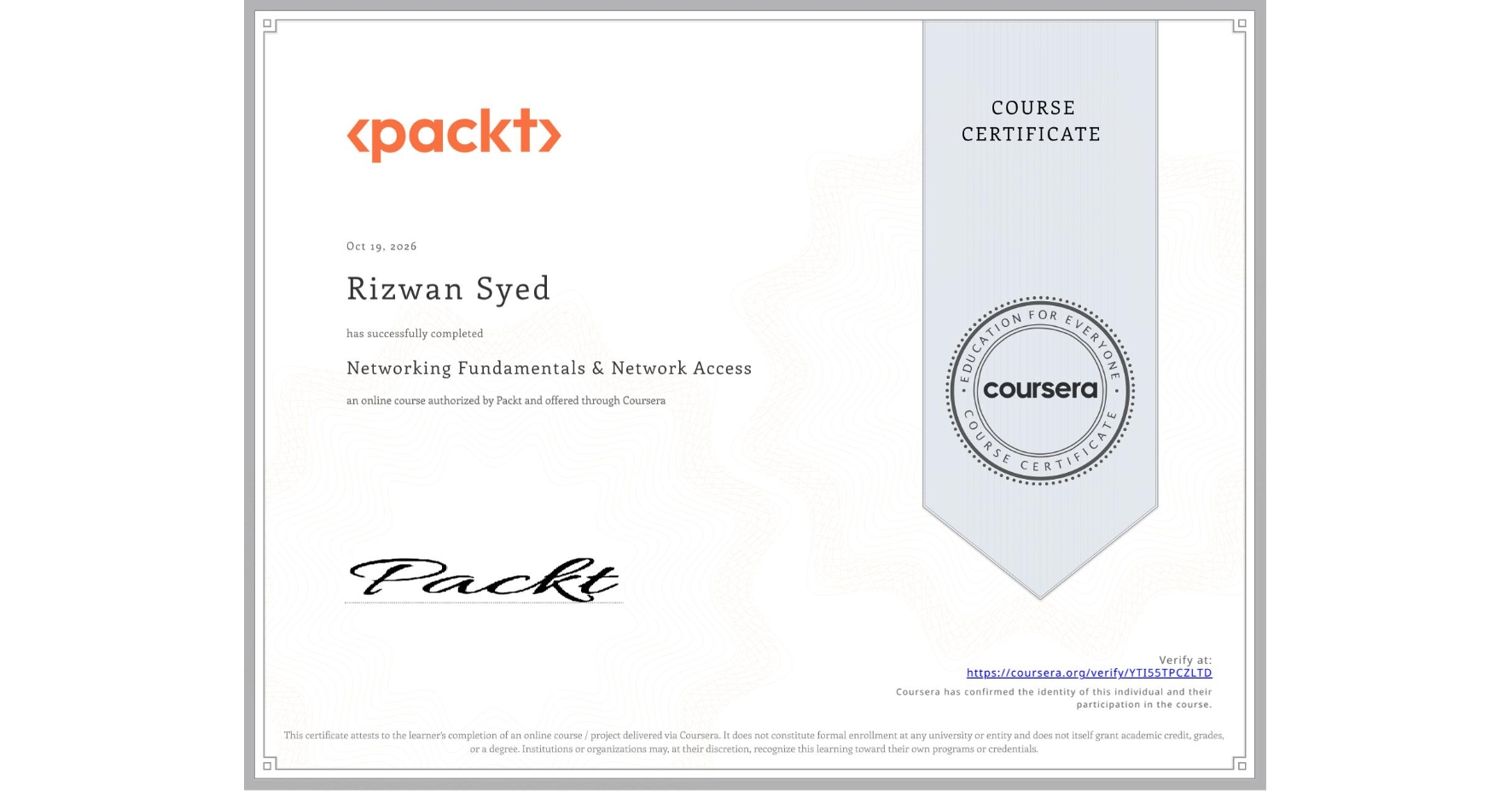
Course certificate
Networking Fundamentals & Network Access
- Issued by
- Packt · Coursera
- Completed
- Credential ID
- YTI55TPCZLTD
Packt course certificate covering network components, IPv4 and IPv6, switching, VLANs, and wireless access. The first course in the Cisco CCNA (200-301) specialization.
Explore the learning behind this story
Continue the journey
View all stories
Learning journal · 3 min read
From Security Alerts to Clearer Decisions: My Generative AI Learning Journey
What completing IBM’s cybersecurity AI course taught me about useful automation, evidence, and keeping human judgment at the center of security work.

Learning journal · 3 min read
Beyond Knowing the Answer: Building Sharper Cybersecurity Judgment
My reflections on IBM’s Security+ and CySA+ assessment course, and the value of turning technical knowledge into clear, defensible decisions.